A shipping zone is a number that tells the carrier how far your package has to travel. Zone 1 is close to where the package ships from, and the number goes up as the distance grows. USPS counts from Zone 1 to Zone 9. UPS and FedEx count from Zone 2 to Zone 8 for most of the country.
The higher the zone, the more you pay to ship and the longer your customer waits.
If you sell online, shipping zones are worth understanding because they're one of the few parts of your shipping bill you can actually change. You can't move your customers, but you can move your inventory closer to them. That's a big part of what a good 3PL logistics partner does for you.
In this guide, we'll walk through how zones work, how they affect your costs and delivery times, and what changed with carriers in 2026. We'll also show how ecommerce fulfillment services running out of fulfillment center locations on both coasts can keep more of your orders in the cheaper, faster zones.
Carriers don't price packages by the exact number of miles they travel. Instead, they group ZIP codes into zones based on how far they are from where the package starts. A customer across town is in a low zone. A customer across the country is in a high zone.
USPS shipping zones are the easiest place to start, because USPS publishes the distance for each one:
UPS shipping zones and FedEx shipping zones work the same way, with two small differences. Their ground zones start at Zone 2 instead of Zone 1, and Alaska, Hawaii, and Puerto Rico have their own separate zone numbers. Each carrier also draws its zone lines a little differently, so the same order can be Zone 5 with one carrier and Zone 6 with another. If you're deciding which carrier to use, our comparison of USPS vs UPS vs FedEx covers price and speed for each.
Your zone always depends on where the package ships from. The customer's address doesn't change, but the zone does if you ship from a different warehouse.
Say your warehouse is in Los Angeles. A customer in Las Vegas is about 230 miles away, so that order goes out as Zone 3. A customer in New York City is more than 2,400 miles away, so that order is Zone 8.
Now say you also keep inventory in a warehouse on the East Coast. That same New York customer suddenly becomes a Zone 1 or Zone 2 order, because the box only has to travel a short distance.
That one change can save you money on every order that ships to the East Coast, and it gets the package there days sooner.
If you want to look up the zone for a specific order, the carriers make it easy. On the USPS Domestic Zone Chart, enter the ZIP code you ship from and the ZIP code you're shipping to, and it tells you the zone. UPS lets you download a full zone chart for your ZIP code from ups.com, and FedEx has a similar lookup on fedex.com. If some of these terms are new to you, our list of common shipping terms explains them in plain English.
For most shipping services, each zone costs more than the one before it. A 3 lb box going to Zone 8 can cost a lot more than the same box going to Zone 2. One order doesn't feel like much, but across a few thousand orders a month, the difference adds up fast.
A few USPS services cost the same no matter how far the package goes. These include Priority Mail Flat Rate boxes, Media Mail, Library Mail, and First-Class Mail for letters and flat envelopes. Most of what ecommerce brands ship, though, goes by Priority Mail or USPS Ground Advantage, and both of those are priced by zone.
This is a change from a few years ago. Small packages under one pound used to ship through a USPS service that cost about the same anywhere in the country. In 2023, USPS replaced that service with Ground Advantage, which is priced by zone. So distance now matters even for your lightest orders.
Shipping also got more expensive in 2026. UPS and FedEx both raised their rates by an average of 5.9%, UPS in late December 2025 and FedEx in early January. USPS followed in mid January, raising Ground Advantage by about 7.8% on average and Priority Mail by about 6.6%. Extra fees went up too, so most brands ended up paying more than those headline numbers.
And because every price goes up by zone, the brands shipping the farthest felt it the most.
The farther a package goes, the longer it takes. Orders to Zone 1 or Zone 2 often arrive in a day or two by ground. Orders to Zone 7 or Zone 8 can take four or five business days, sometimes more.
Here's a common example. If all your inventory sits in one warehouse near New York, a ground order to a customer in Oregon can take five or six days to arrive. Customers notice that, and some of them won't order again. You could pay for expedited shipping to get it there faster, but that cost comes straight out of your profit.
The cheaper fix is to start closer to the customer. Fast, affordable last mile delivery is a lot easier when the package isn't crossing the whole country first.
Carriers don't just charge for how heavy a box is. They also charge for how much space it takes up on the truck. This is called dimensional weight. If a box is big but light, the carrier bills you as if it weighed more, because it's taking up room another package could have used.
In July 2026, USPS changed its formula so large boxes count as heavier than before. It now uses the same formula UPS and FedEx already use, and it rounds every measurement up to the next full inch. This only affects boxes bigger than one cubic foot (about the size of a basketball box), but for those boxes, the change is real.
For example, a 14 x 12 x 8 inch box holding 3 lbs of product used to be billed as 12 lbs. Under the new USPS rules, that same box is billed as 14 lbs. And that billed weight is then priced by zone, so a big box going far costs you twice over.
The good news is that this is easy to work on. Use the smallest box that safely fits the product. Smart dunnage, the filler that protects items inside the box, can keep products safe without forcing you into a bigger box.
If you ship heavy B2B orders on pallets, freight is often cheaper than sending lots of separate parcels. Our guide to parcel vs LTL vs FTL explains when to make that switch.
Free shipping is hard to offer when some orders cost three times as much to ship as others. Most brands that make it work use one or more of these approaches:
The last one is the only option that actually lowers your shipping cost instead of moving it somewhere else. At ShipBots, our fulfillment center pricing is simple and based on your volume, with no hidden fees and no long term contracts. That makes it easy to figure out what free shipping would really cost you.
A 3PL (third party logistics company) stores your inventory and ships your orders for you. A good one does more than pack boxes. It helps you keep your average zone low in a few ways.
First, it can split your inventory between warehouses in different parts of the country. When an order comes in, it ships from whichever warehouse is closest to the customer. A customer in Boston gets their order from the East Coast, and a customer in San Diego gets theirs from the West Coast.
Second, it compares carriers on every order. USPS might be the cheapest choice for a short trip, while UPS or FedEx might win on a long one. The software checks each order and picks the best price for the delivery speed you promised.
Third, it shows you where your products actually sell, so you know how much stock to keep in each warehouse.
At ShipBots, all of this runs on our warehouse software and a live inventory portal you can check anytime. Our ecommerce integrations connect with Shopify, Amazon, TikTok Shop, Walmart, BigCommerce, WooCommerce, and more, so orders from every store land in one place. Before any order ships, our Vision AI camera system checks that the right items went in the box. That's how we keep our accuracy rate at 99.999%, because a cheap, fast shipment doesn't help anyone if the wrong product shows up.
Your past orders tell you where your inventory should live. Here's a simple way to check:
If your average zone drops by one or more, you'll save money on shipping and your customers will get their orders sooner. Our guide to choosing a 3PL location covers other things to think about before you decide.
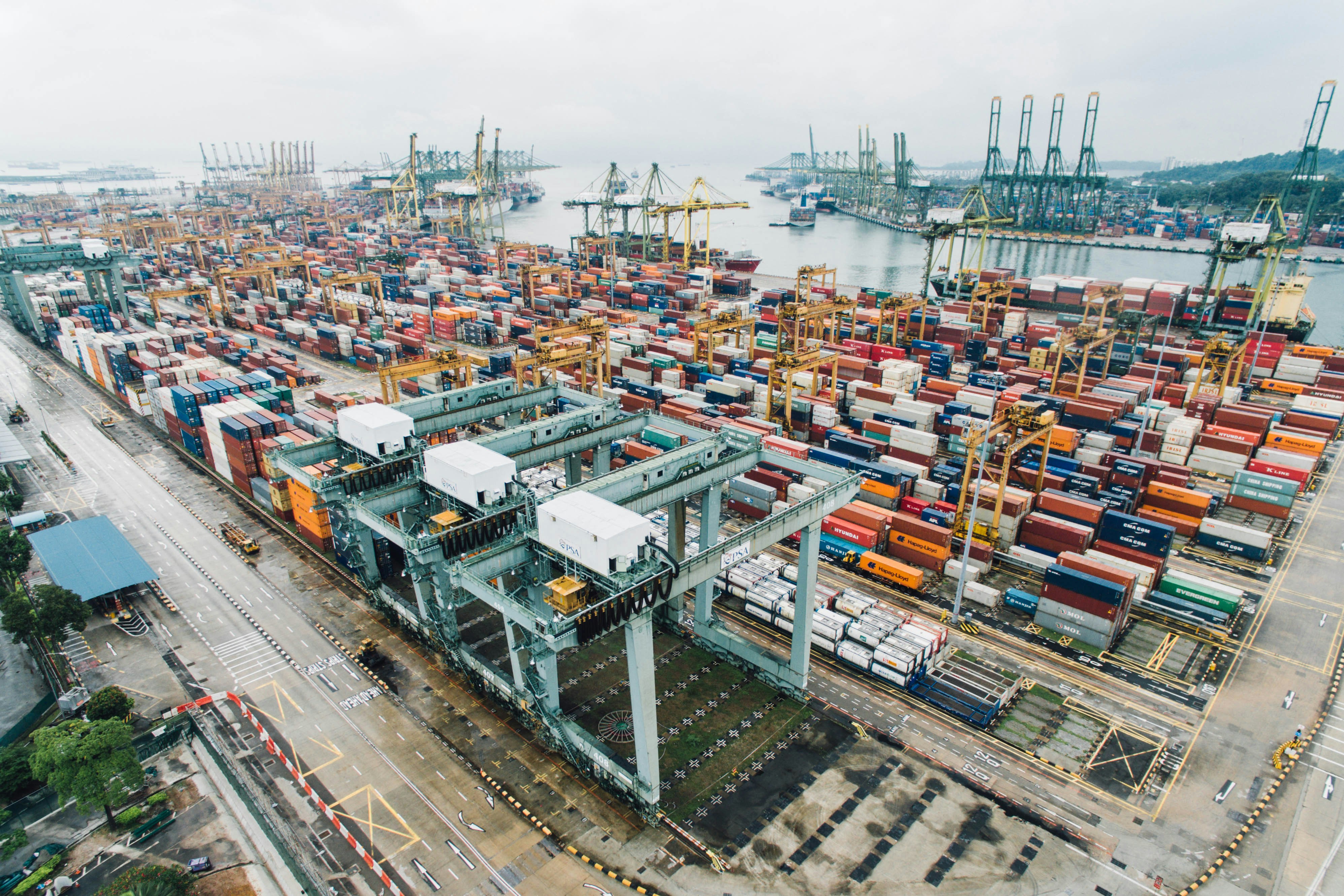
Location matters for incoming inventory too. ShipBots is based in Los Angeles, just minutes from the Port of Long Beach. If you import your products, our shipping warehouses in Los Angeles can get your inventory checked in and ready to sell within 48 hours of arrival.
Keeping inventory on both coasts means most U.S. customers are no longer far away. Very few of your orders end up in Zones 7 or 8, and two day ground delivery becomes possible for much of the country without paying for air shipping.
A second warehouse also gives you a backup. Bad weather, carrier delays, and peak season fulfillment rushes can all slow things down. When one region is backed up, you still have another place to ship from.
[Image: two_coast_warehouse_map.webp | Alt text: U.S. map showing how East Coast and West Coast warehouses keep most customers in low shipping zones]
Software can only do so much on its own, so we pair it with people. At ShipBots, your dedicated account managers work inside our warehouses. If you want to move inventory between coasts or ask why an order shipped the way it did, you can reach a real person by phone, email, Slack, or text, even on the weekend.
Once you understand shipping zones, you can set up your fulfillment so orders get to customers faster and cost you less to ship.
ShipBots stores, picks, packs, and ships your products from warehouses on both U.S. coasts. We work with the major carriers for discounted rates, compare prices on every order, and ship each one from the location that keeps it in the lowest zone we can. We ship more than 3 million orders a year, get 99.9% of them out the same day, and keep our accuracy at 99.999%.
There are no long term contracts. We'd rather earn your business every month through performance than lock you in. We ship so you can grow. If you'd like to see how much a lower average zone could save you, get an instant quote.
Shipping zones are numbers carriers use to measure how far a package travels from where it ships to where it's delivered. Lower zones are closer and cheaper. Higher zones are farther, cost more, and take longer.
USPS has nine zones, from Zone 1 to Zone 9. Zone 9 is only used for some U.S. territories and special locations. UPS and FedEx use Zones 2 through 8 for most of the country, with separate zone numbers for Alaska, Hawaii, and Puerto Rico.
Go to the USPS Domestic Zone Chart on postcalc.usps.com and enter the ZIP code you're shipping from and the ZIP code you're shipping to. UPS and FedEx have zone charts on their websites too. Most shipping software and 3PLs figure out the zone for you automatically.
Zone 8 is the farthest zone in the lower 48 states, covering anything more than about 1,800 miles away, like Los Angeles to New York. It's the most expensive zone to ship to, and ground delivery usually takes four or five business days or more.
Yes. You can use air services like overnight shipping, but they cost a lot more. A cheaper way is to ship from a warehouse closer to the customer, so the order isn't Zone 8 in the first place.
No. Priority Mail Flat Rate boxes cost the same no matter where they're going, as long as everything fits and stays under the weight limit. They're usually a good deal for heavy items going far, and a worse deal for light items going a short distance.
The biggest change you can make is shipping from more than one location, like one warehouse on each coast, and sending each order from the closest one. Using smaller boxes and comparing carriers on every order will save you more on top of that.
Not in the same way. International shipping is priced by country or region instead of Zones 1 through 9, and customs, duties, and taxes add their own costs. A partner that offers international shipping services can help you pick the right option for each country.